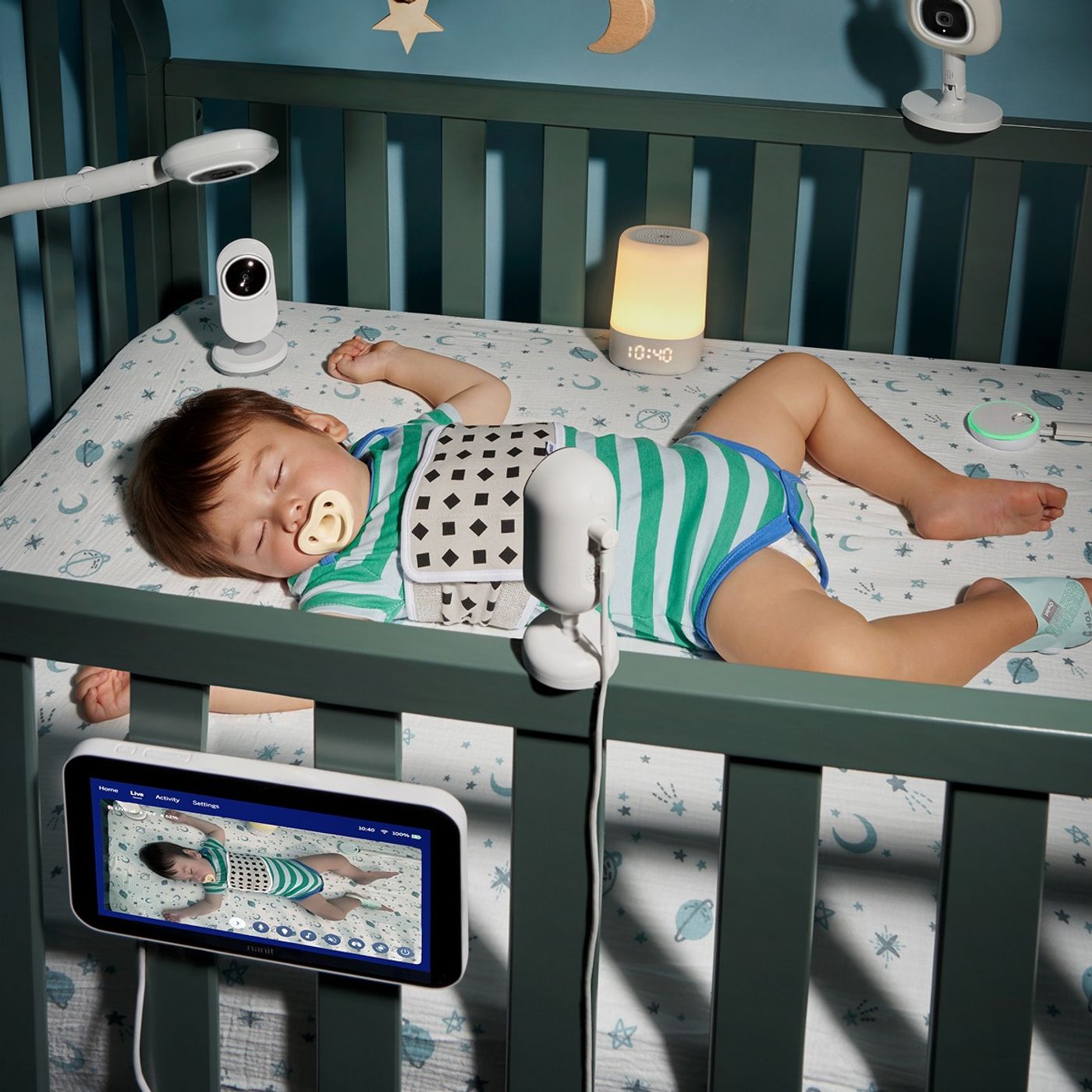
Health Trackers Are Everywhere. Do Babies Need Them, Too?
Summary
This episode of The Daily explores the rapidly expanding world of health-tracking technology, with a specific focus on the 'latest frontier': AI-powered monitors for babies. Reporter Sapna Maheshwari shares her personal experience using devices like the Nanit, which tracks a baby's every movement and sleep cycle to provide parents with 'digestible' data insights. The episode highlights the business ambitions of these companies, which seek to expand their monitoring from infancy through age ten and beyond, effectively creating a lifelong database of personal health metrics. The narrative explores the tension between the benefits of data—such as motivating healthier habits through 'gamified' metrics like 'WHOOP age'—and the potential downsides, including increased parental anxiety and the erosion of human intuition. Featuring perspectives from tech CEOs, a skeptical grandmother, and data-obsessed users, the episode questions whether we are gaining vital health insights or losing a fundamental part of the human experience to constant surveillance.
Key Takeaways
- AI-powered baby monitors are transitioning from simple video feeds to diagnostic tools that track developmental milestones and provide AI-driven parenting advice.
- There is a growing generational divide in parenting, where modern parents use technology to 'optimize' sleep and environment, while older generations emphasize intuition and adaptability.
- Wearable tech for adults is a multi-billion dollar industry that uses 'gamification' (like sleep scores and 'body age') to successfully influence behavioral changes.
- Tech companies are aiming for 'cradle-to-grave' data collection, viewing the early years of childhood as a 'black box' that needs to be digitized.
- Over-reliance on health data may lead to 'orthosomnia' (anxiety about sleep) and a decreased ability to read natural bodily cues.
Notable Quotes
We have this infrastructure and opportunity to unlock this black box that's the first five years of life that exists today.
Is technology dulling our instincts? Our senses, really.
I think your mind has been conditioned by these monitors what the temperature should be... but I don't believe in that.
It’s kind of like a daily report card of your health and well-being and, you know, very motivating in that way.
We envision a world where people will have their data from zero to a 100.
Chapter Outline
The Rise of AI Baby Monitors
Host Rachel Abrams and reporter Sapna Maheshwari discuss the rise of high-tech baby monitors like Nanit and Owlet, which use AI to track sleep patterns, breathing, and movements.
The Business of Baby Data
Sapna interviews Nanit CEO Anushka Salinas about the company's goal to turn the 'black box' of early childhood development into actionable data, potentially tracking children up to age 10.
A Grandmother’s Perspective: Intuition vs. Data
Sapna’s mother offers a generational counter-perspective, arguing that constant monitoring creates unnecessary stress and disrupts the natural, intuitive process of parenting.
Wearables for Adults: The Gamification of Health
The discussion shifts to adult wearables like WHOOP and Oura, exploring how 'gamifying' health metrics like 'WHOOP age' can successfully motivate lifestyle changes.
The Philosophical Cost of Constant Surveillance
The episode concludes with a reflection on whether relying on AI-fueled advice dulls human instincts and the potential long-term implications of lifelong health tracking.